Analysis of intergenerational mobility between formal and informal sector in WAEMU countries
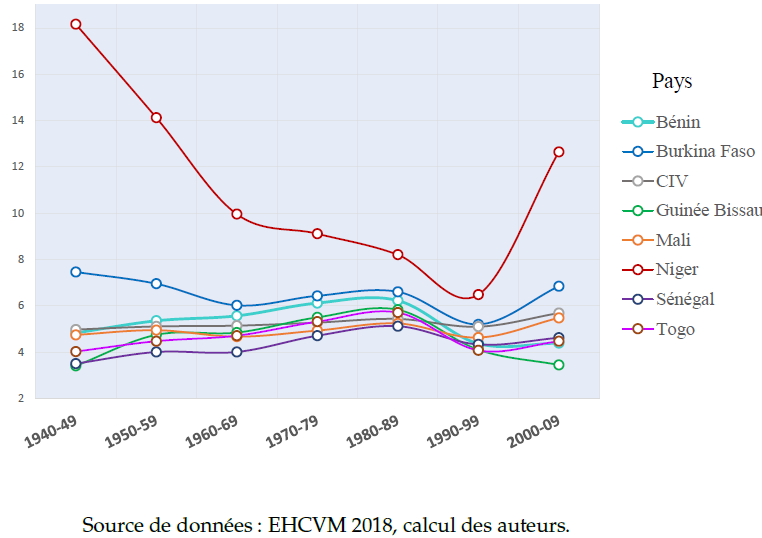
In this study, we analyze how the parents’ sector influences that of the children. To conduct this study, we adopted a micro-econometric approach based on the estimation of odds ratios, a logistic model, UniDiff, and structural equation modeling. The data used comes from the Harmonized Survey on Household Living Conditions (HSHLC-2018). The results show that there is an inequality in access to the labor market in the WAEMU region. This inequality is captured by the influence of parents’ status in accessing different sectors of activity, namely the formal and informal sectors. However, we note a significant disparity in terms of opportunity inequality among the union’s various countries. The landlocked countries are characterized as having high social fluidity, highlighting a strong reproduction of the parents’ sector of activity. On the other hand, the coastal countries are characterized by relatively low social fluidity, showing the weak influence of parents’ status on that of the children. Furthermore, the results of the structural equation model show that in addition to the parents’ status, the parents’ education level is an explanatory factor in the positioning of children in a given sector of activity.
GitHub: Intergenerational Mobility.
Research paper on targeting poor households using mobile data
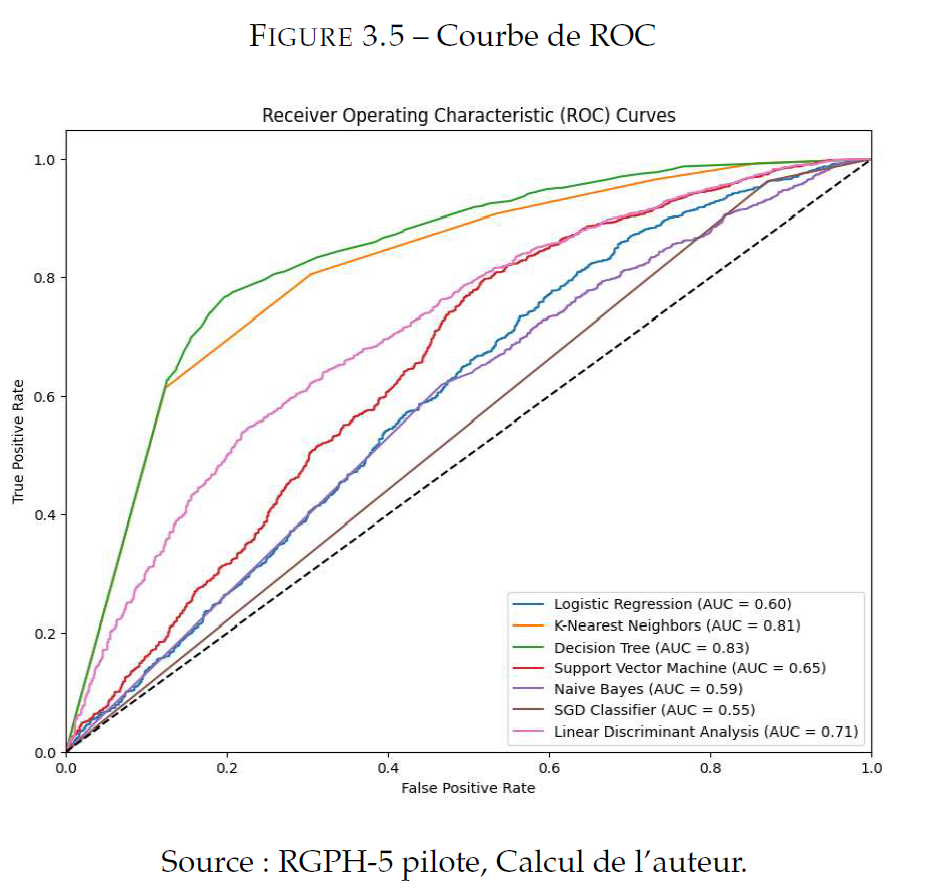
Ending poverty in all its forms and dimensions around the world by 2030 is one of the main Sustainable Development Goals (SDGs). This involves creating targeting strategies to help people living below the poverty line. Our research aims to identify poor households in Senegal using mobile phone data from household heads and supervised learning. To do this, we use data from the pilot census of the Senegalese population combined with communication information from household heads. The results of the study show that decision tree models combined with mobile data can classify poor households with 81% accuracy. Robustness analysis shows that the model would perform even better with more data. Targeting programs should therefore include mobile phone data from household heads in their strategies to improve the well-being of populations and have up-to-date information on household living standards.